
What a Skipped Fall Tune-Up Really Costs You
Put off garage door maintenance this fall and the bill usually comes due in January, at the worst possible moment. A spring that was already fraying in October doesn't fail gently in warm weather—it snaps on the coldest morning of the year, right when you're trying to get to work before an ice storm. A door that drags slightly in fall because of dry rollers can freeze solid to the track overnight after freezing rain, and forcing it open with the opener can strip the gears or bend the track. None of these are cheap or convenient fixes once winter has its grip on central Indiana. A couple of hours now is a lot less painful than an emergency repair call during a January cold snap.
Seal Up Before the Cold Air Moves In
Indianapolis winters bring big swings—mild one week, single digits the next—and your garage door's weatherstripping takes the brunt of it. Check the rubber seal along the bottom of the door and the flexible strips along the sides and top of the frame. If they're cracked, flattened, or pulling away from the track, cold air, snowmelt, and road salt spray will find their way in.
- Bottom seal: Replace it if you can see daylight under the door when it's closed, or if it's hard and brittle instead of pliable.
- Side and top seals: Press on them—if they don't spring back, they've lost their flexibility and won't block drafts.
- Threshold seal: If your garage floor slopes toward the door, a threshold seal keeps melting ice and slush from pooling inside.
Good seals don't just keep the garage warmer—they keep moisture off your opener, tracks, and any stored equipment, which matters a lot once road salt starts tracking in on tires and boots.
Springs: The Part Most Likely to Fail in Cold Weather
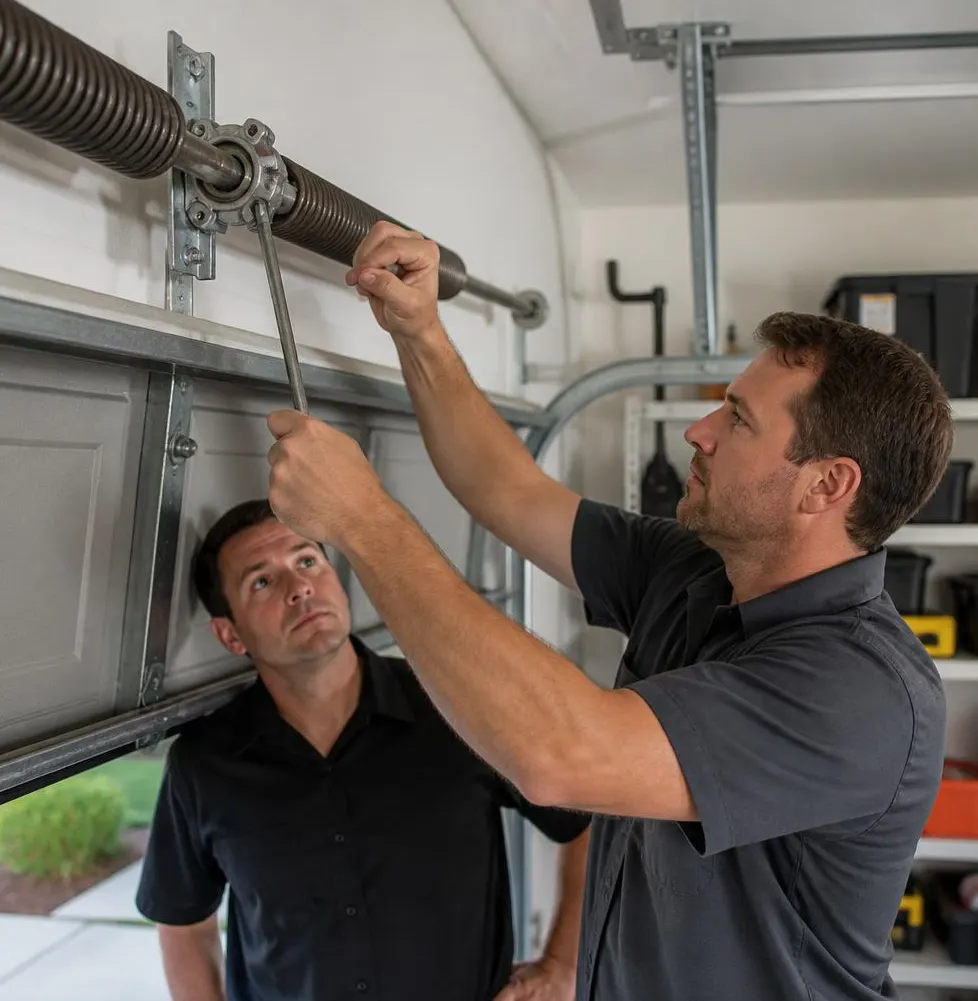
Torsion and extension springs are under constant tension, and cold makes steel more brittle and less forgiving of metal fatigue. A spring that's near the end of its lifespan is far more likely to break during a hard freeze than in the middle of summer. Watch for these warning signs before winter sets in:
- The door feels heavier than usual when lifted manually (with the opener disconnected).
- You hear a loud bang from the garage—that's often a spring snapping.
- The door opens unevenly, one side lifting faster than the other.
- Visible gaps or separation in the spring coils.
Springs are rated for a certain number of open-close cycles, typically somewhere in the 10,000–15,000 range depending on the spring, and most homeowners don't track that number. If yours is original to a door that's seven or more years old, fall is a smart time to have it inspected rather than waiting to find out the hard way. This is not a DIY repair—torsion springs store enough energy to cause serious injury.
Give the Opener a Cold-Weather Check
Garage door openers work harder in winter. Cold temperatures thicken grease and lubricant, slow belt and chain response, and can shorten the life of backup batteries right when you need them most—during a power outage from an ice storm or heavy snow. Before winter:
- Test the battery backup if your opener has one; replace it if it's more than a couple of years old.
- Listen for grinding or straining sounds, which can mean the motor is working harder than it should.
- Check that the safety reverse sensors aren't blocked or knocked out of alignment—cold snaps often come with holiday décor and extra clutter near the door.
- Make sure the manual release cord works smoothly, in case you lose power and need to open the door by hand.
Lubricate Rollers, Hinges, and Tracks
Road salt and brine splash up from cars and driveways all winter, and that salty moisture accelerates rust on metal rollers, hinges, and track hardware. A light coat of garage-door-specific lubricant (not WD-40, which washes away too fast) on rollers, hinges, and the torsion bar helps the door move smoothly and resists corrosion. Wipe down the tracks first to remove summer dust and grit before applying lubricant, and check that the tracks themselves are still straight—a track bent even slightly can cause the door to bind or jump when temperatures drop and metal contracts.
Test the Balance Before the First Snow
With the opener disconnected, lift the door halfway by hand and let go. A properly balanced door should stay in place. If it drifts down or shoots up, the springs are compensating unevenly, which puts extra strain on the opener and increases the odds of a winter breakdown. This simple test takes two minutes and tells you a lot about whether your system is ready for the season.
When to Call Indianapolis Garage Door Co
If your door is heavy to lift, making new noises, or you're not sure how many years are left on your springs, don't wait for a freeze to force the issue. Indianapolis Garage Door Co handles spring replacement and full garage door maintenance visits that cover exactly what's above—seals, rollers, opener function, and spring tension—so you're not guessing. We show up on time, diagnose the real problem instead of guessing, and get it fixed before the cold makes a small issue a lot worse.
If you're anywhere in Indianapolis, Carmel, Fishers, Greenwood, or the surrounding area and want your garage door ready for whatever this winter brings, call Indianapolis Garage Door Co today to schedule a pre-winter inspection.